Also check out below articles
 28-08-2026
Embed Google Forms on Your Website
Google Forms is a popular way to create manage and analyze forms. In this22-06-2026Is it possible to develop your own WordPress theme?
An experiment I’ve been working on for several weeks now involved using27-05-2026Is a "Coming Soon" page a good idea?
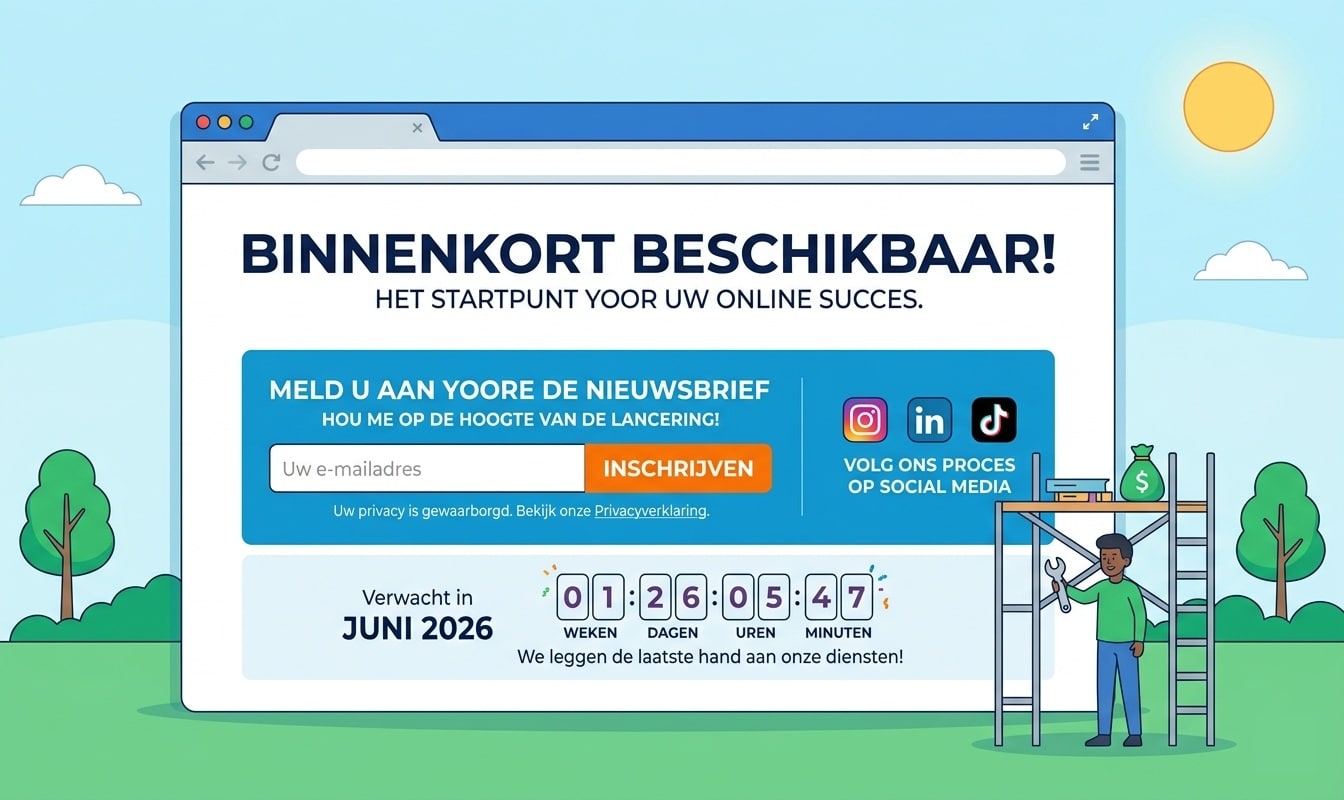
A common phenomenon in the world of websites and the internet is the “Coming Soon” page. This is a placeholder page that visitors see when your website isn’t quite ready to be launched to the public.
But is a “Coming Soon” page a good idea?
And should you set one up while you’re still working on launching your website, your business, or your startup? In this blog post, let’s take a look at the pros and cons and what you should keep in mind.
Pros
In most cases, it’s advisable to use a “Coming Soon” page, as this can offer the following benefits:
1. You’re already getting a head start on SEO (Search Engine Optimization)
Google needs time to discover and index new websites. By putting a page online early on—one that primarily features relevant text and keywords—your domain begins to build authority and age. When your actual website goes live, you’ll already be one step ahead. For example, if you’re selling ice skates, create a “Coming Soon” page where you outline your vision for the online store and list the products you plan to offer. This helps establish a certain association with these terms and brands. And you have the chance that this will be picked up a bit faster as soon as you go live.
2. You build a mailing list (lead generation)
This is perhaps the biggest advantage. Place a sign-up form for your newsletter on the page. People who are truly interested in your product, service, or blog will leave their email address so they can be notified when it’s published. This way, you’ll already have customers or readers on day one. In this case, however, make sure you do your research beforehand and have your privacy policy in order. It’s not allowed to just send emails to people and collect personal data, and you must comply with legal regulations.
3. Generate curiosity and “hype”
People are naturally curious. A mysterious or intriguing “Coming Soon” page builds anticipation. It also gives you something concrete to link to on your social media channels while you’re still hard at work building it behind the scenes.
4. Gather direct feedback or market research
You can use the page to find out what your target audience needs. Ask, for example: “What should our new tool do?” or “Leave your email address and vote for your favorite design.” Or offer something like “Free e-book for the first hundred sign-ups.”
What must be included?
A blank page with just “Coming Soon” misses the mark and accomplishes nothing. Make sure the following elements are present:
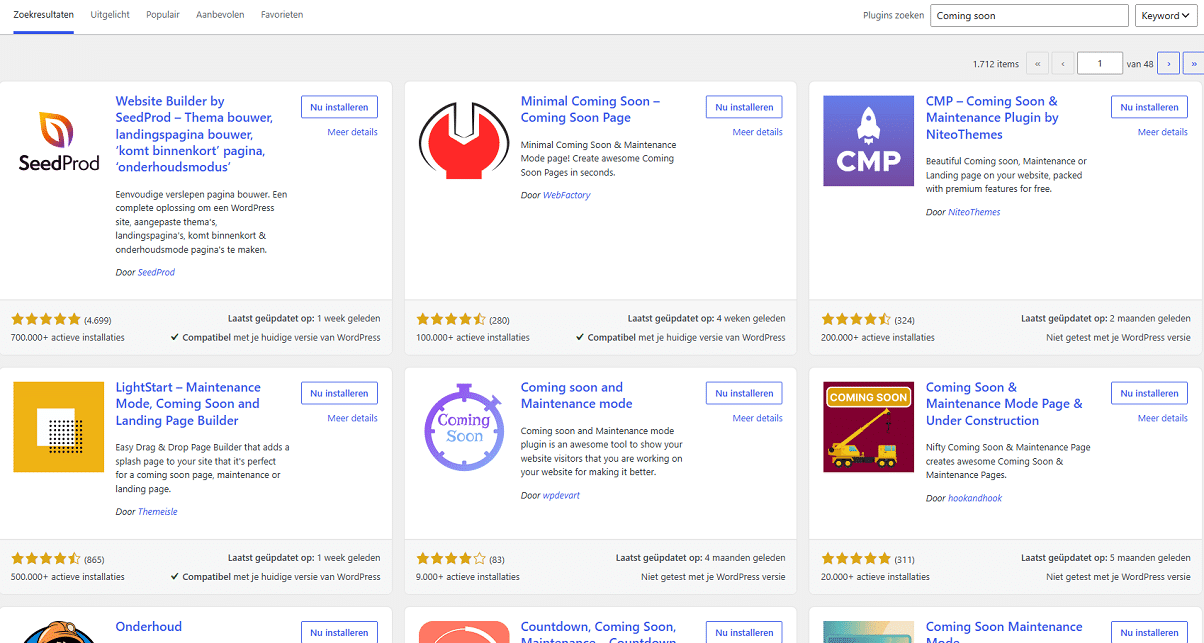
• The “WIFM” (What’s In It For Me): Explain in one or two meaningful sentences what’s coming and why the visitor should follow along. Just “Something great is coming!” as many plugins or pre-made tools display here for you, is a good (bad) example of this.
• A clear call-to-action (CTA): Usually an input field for an email address (e.g., “Keep me updated” or “Get 10% off at launch”). However, be sure to comply with data protection regulations.
• Social media links: Give visitors the option to follow you on Instagram, LinkedIn, or TikTok right now so they can keep up with the process. Or share other teasers you’ve already posted.
• A reference to the timing (optional): A countdown timer or simply “Expected in June 2026” provides clarity. However, always be careful when mentioning specific dates, as every project tends to run late.
Tip: Make sure the design of your “Coming Soon” page already matches the corporate design you’ll be using. This ensures immediate brand recognition.
Disadvantages
Although a “Coming Soon” page is useful in many cases and serves a purpose, there are certainly situations where it is not recommended. Let’s discuss these cases below:
1. If the page remains unchanged for months
Nothing is as deadly to a visitor’s enthusiasm as a “Coming Soon” page that still displays exactly the same content after six months.
• The risk: Visitors (and Google) get the impression that the project is “dead” or that the company is unprofessional. Do you still need months? Then wait a little longer before launching your online presence.
2. For a simple update or maintenance work (Maintenance)
Are you updating an existing website, or is the site unavailable for a few days due to maintenance? Then don’t use a “Coming Soon” page, but rather a maintenance mode (Maintenance Mode).
• The risk: A “Coming Soon” page often fails to correctly transmit the 503 status code (temporarily unavailable) to Google. If Google thinks your old website has been permanently replaced by a blank page, this can significantly harm your established SEO rankings.
3. If there is absolutely no information on it
A page with only a logo and the text “Coming soon!” without any further context is of no use whatsoever. And it is more likely to be perceived negatively than to spark interest.
4. If you want to start selling immediately (and the product is already available)
If your product, service, or portfolio is already fully ready, there is no point in delaying the launch beyond a “Coming Soon” page.
• The risk: You’re simply missing out on revenue or leads. Sometimes a “soft launch” (going live quietly and improving gradually) is much more effective than waiting for the perfect launch date. You should also keep in mind that websites that offer only content need a few months to gradually achieve organic results.
5. In a B2B environment where direct contact is crucial
If you’re a business service provider (e.g., lawyer, consultant, or tax advisor) and potential clients are looking for you right now, a closed door is fatal. In this case, a simple (temporary) one-page website is much better. Post your contact information, your services, and a LinkedIn link there right away. That way, you’re immediately reachable while you build out the back end.
In short: A “Coming Soon” page doesn’t make sense if it becomes a static, mysterious digital wall. It’s only useful if it’s an active step toward your launch. Would you also like a solid foundation for your next online project? Then take a look at our hosting packages—we offer both Windows and Linux web hosting. So you can get started on any project!